

Keep/Cut/Create: An Alternative to New Year's Resolutions
Designing for well-being in 2026

In the deepest part of winter, when the fields were frozen and the days were short, my dad would finally slow down.
The tractors stood silent. The soil slept under snow. And at the kitchen table, with a mug of tea and a stack of battered notebooks, he would reflect. His spidery handwriting filled the pages as he made plans for the coming year: which crops would rotate onto which fields, which seeds needed ordering, which ancient tractors needed one more round of tinkering before spring. On a regenerative farm, winter reflection is how he prepared for spring growth.
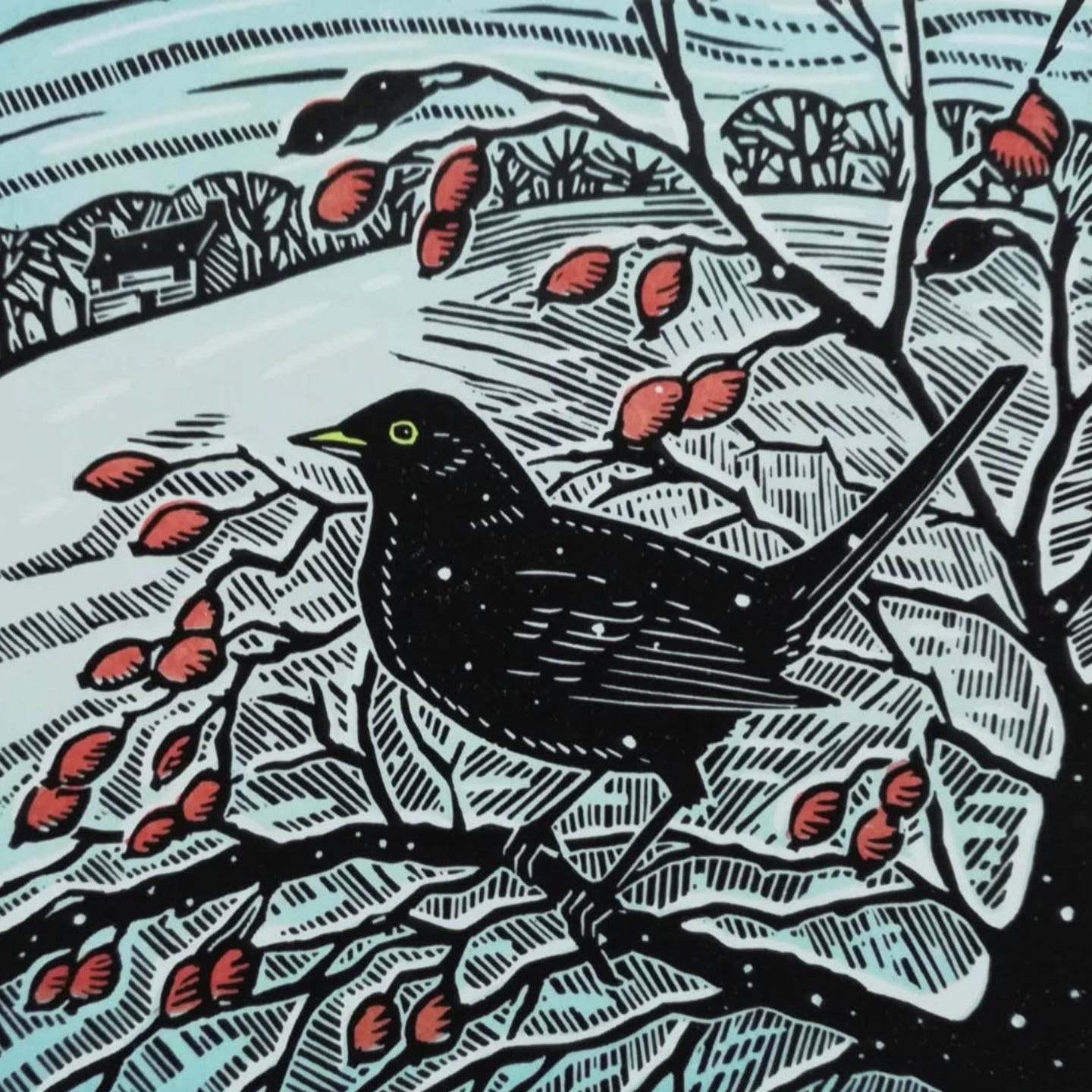
The new year offers a similar invitation—for farmers and educators alike.
In Bold Moves for Schools, Dr. Marie Alcock and Dr. Heidi Hayes Jacobs argue that designing learning in a changing world begins with three deceptively simple questions:
What should we keep?
What should we cut?
What should we create?
These questions are useful as a school, but they’re also useful as an individual starting a new semester. I love these questions instead of the classic New Year’s resolutions because so many of us ended the fall semester feeling exhausted and overwhelmed. The last thing we need is to pile more onto already exhausted lives.
Instead, these questions invite simplification, subtraction, and intentional creation as acts of leadership.
“What to Keep” Reflection Questions:
What is essential to my role? What are my core “big rocks” that I want to make sure I make time for every single week?
What relationships are important to me, and how will I be intentional about nurturing them?
What in the past month has brought me energy? How can I incorporate more of that task into my life?
“What to Cut” Reflection Questions:
What in the past month has drained my energy? Maybe I can’t cut that task altogether, but could I set a boundary on it in some way? (For instance, could I take my email app off of my phone so that I only check it in the office?)
Where might there be initiatives, paperwork, or processes that could be simplified, delegated, or even cut to allow focus on my “big rocks”?
What habits might be depleting me? (For instance: eating alone at my desk, skipping workouts, or checking email right before bed.) What is one habit I could cut that could help me feel more centered?
“What to Create” Reflection Questions:
What relationships bring me the most joy? How could I spend more time or energy with those people on a regular basis? (For instance, setting a reminder to call my sister, or asking a trusted colleague to meet for a regular walking meeting.)
What is my nightly “shut down” routine to complete the stress cycle? Do I need to add a regular ritual to help myself transition from work life to home life?
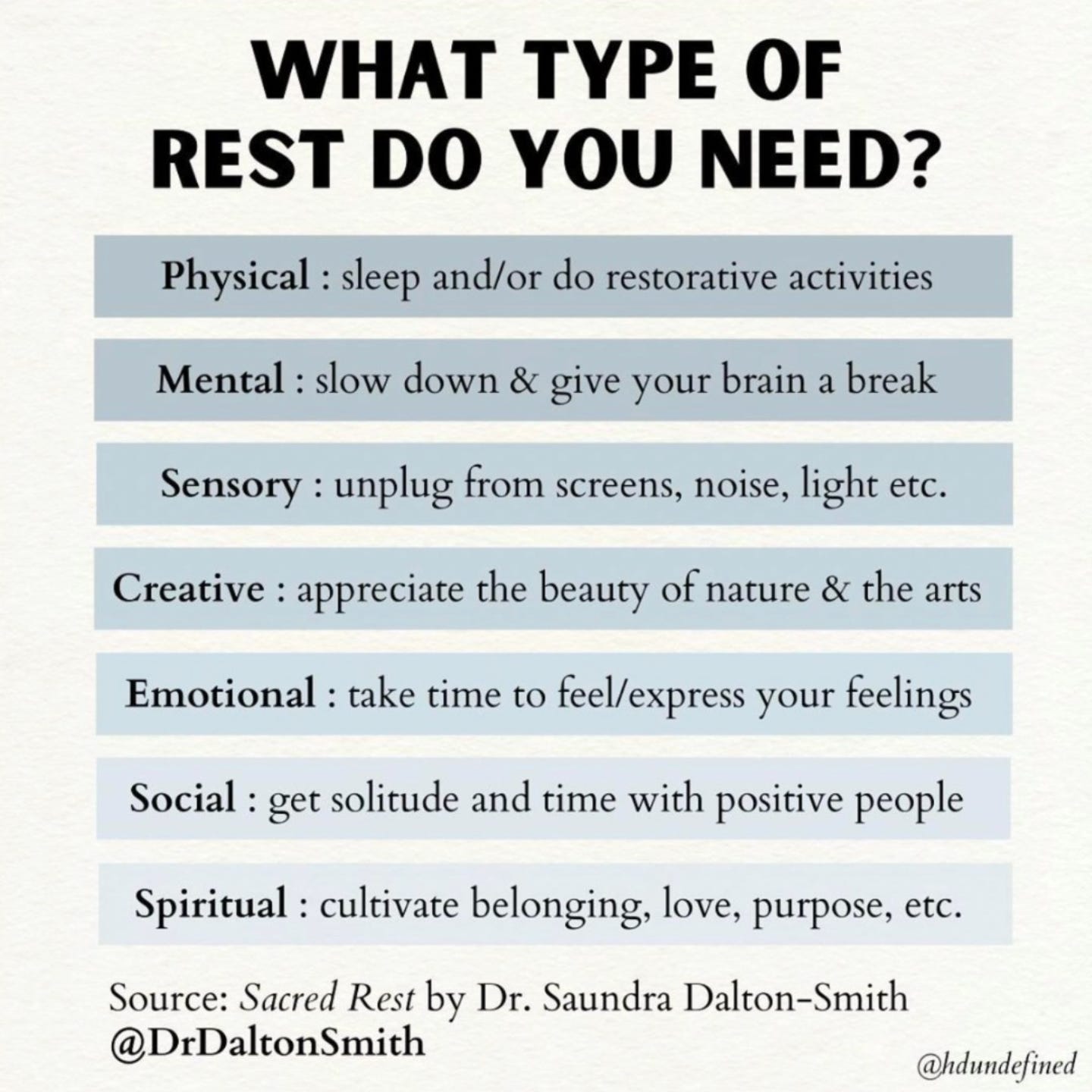
What kinds of rest do I need more of? How can I be more intentional about incorporating multiple types of rest into my life?
7 Types of Rest
If you’re going to add anything into your already hectic life, make it something life-giving. Like the carefully chosen mixture of pasture cover planted on a regenerative farm, intentional rest will be a mixture of activities and states that replenish you where you need it most. Dr. Saundra Dalton-Smith’s concept of the seven types of rest has illuminated for me the complexity of regeneration.
Intentionally choosing to keep things that bring you energy, cut things that drain your energy, and create habits that add joy and peace to your life will allow you to embody purposeful leadership.
No classroom will flourish if its teacher is burning out. No school culture will flourish if its leader is burning out. Regeneration is always mutual since the nervous systems of the adults shape the nervous systems of the students. Your well-being is part of the larger story of the well-being of those whose lives you touch.
Like a farmer quietly planning in the dark of winter, the choices you make now—often unseen, often uncelebrated—are laying the groundwork for what will grow in the months ahead. When leaders design their own lives with care, schools become places where both adults and children can move beyond survival and into flourishing.
That, too, is regenerative work.
Citations:
Dalton-Smith, Saundra. “The Real Reason We Are Tired and What to Do About It.” Ted Talk, April 9, 2019. Link.
Heyes Jacobs, Heidi, & Alcock, Marie. Bold Moves for Schools: How We Create Remarkable Learning Environments. Alexandria, VA: ASCD, 2017.
I don’t want to brag, but I’m resting right now lol
I believe I’ve finally found the questions I’ve been yearning for. I also love how it feels like we’re at coffee together and having a conversation as I read this piece. Happy New Year!